Showing posts with label excercise. Show all posts

Thursday, December 6, 2012

10,000 Revisited

Greetings, volks. Welcome to Hohenfels Volks, THE place for our place! Everywhere you look, you’ll see white! Winter is here for the long haul, and that means it’s time to get some seasonal shots. I hope everyone is getting geared up for Christmas and some great photography.

Earlier today, we had blue skies and some nice clouds, perfect for the landscape shooter in all of us. Of course, things turned ugly quick, and left us in the midst of a dark and icy wall of snow. As often happens, the sun managed to beat back the snow and again we were ready for making some great shots.

Enough weather, that’s not what we’re here for, right? Today we’re going to talk about pride and accomplishment. It’s also a chance for an exercise in good old-fashioned photography. Even though we’re using our digital cameras, and often forget the importance of each shot we make, we can return to the old ways. Remember, as Henri Cartier-Bresson said, “You’re first ten thousand shots are your worst.” In a much older post, we addressed this and modified it to be about 100,000 to 1,000,000 shots. This is due to the inherent nature of instantaneous feedback and automatic cameras.

In the earliest days of photography, folks used glass plates for their negatives. Then film came along. In those early days, your film, or plate, was only sensitive to blue light. This made balancing your light and color very important. With the advent of thinner films and panchromatic emulsions, more sensitivity was added. Then, of course, came color film. When you shot either a sheet or roll, you couldn’t change your ISO or color balance. Film and digital sensors can be thought of as the same thing, and for the rest of this article will be used interchangeably.

Film costs money. It cost money in the old days, as well. When a photographer made shots, he weighed the value of the film and the shot. Every photograph was precious, and had to be made with care. Exposure, color balance, even composition had to be weighed and given some measure of value in relation to the photo. Photography took time, to both master, and in terms of the individual image created. Light meters for measuring exposure, going back to the 1800’s, are available on auction sites all over the internet. Focusing aids, powder flashes, apertures, and even shutters were part of the photographer’s knowledge. In many of the older lenses, the aperture was adjusted using an insert placed in the lens at the time of the photo.

Now that we see how valuable the image was, and the knowledge to make an image, we can see how those early photos, and those that have come down to us through the years, were not the product of guesswork or automation.

For the next few days, try doing an exercise in film. Choose one ISO for your camera, choose one color balance, and only limit yourself to 36 shots per session. Remember, getting your color balance and ISO right will require thought and planning. It will also require learning about your intended shooting situation. If you’re shooting outside, shoot in daylight or around 5200K, and inside shoot at tungsten or around 3200K. If you’re shooting in bright conditions, choose ISO 100, in the dark ISO 800. Finish your 36 shots before changing your settings. Also, don’t look at your images on the camera monitor, or delete any shot. Wait until you get home to see what you have. This will encourage you to value your images, while also helping you improve.
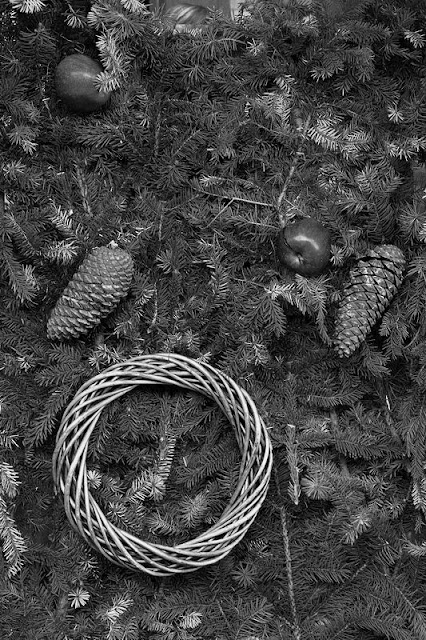
Hohenfels Volks: Dresden Christmas
EI 500, f/5.6, 1/60, 56mm
I couldn't resist this shot, the mix of shapes, textures, and tones are intriguing! Shooting manual all day, let me have control of the camera, instead of the camera controlling me. It also allowed me to use my knowledge to get what I wanted.

This little exercise will require you to know your camera settings, it will require the knowledge to get the shot right, and it will allow for a sense of visualization to settle in. Visualizing your image is an incredibly useful tool in photography. This is a great time to undertake this exercise, as our changing weather conditions, and lighting, will challenge even the best without proving impossible with a little effort. As an added bonus, it’ll make every shoot an adventure, and every moment until the photos are loaded like Christmas. It’s a fun way to experience the anticipation of Christmas with a gift in every session! It’ll also make shorter work of getting the best shots, since you’ll be improving with each photo made. You’ll also develop your confidence, which always helps! Remember, a great camera doesn’t make a great photographer, any more than a great kitchen makes a great cook.

Please feel free to share your photos on our Facebook page. Everyone here would love the chance to see your work! Is there anything you’d like to see here? Do you have a question or an idea? Share your thoughts here or at the Hohenfels Volks Facebook page. Of course, commenting on both Facebook and here is always appreciated, too! Don't forget, we're on Google+, too!

Wednesday, July 11, 2012

Creative Exercising

Greetings, volks. Welcome to Hohenfels Volks, THE place for our place! Today, starting out gray and rainy, leaves Hohenfels in the clutches of a very pleasant evening!

Running into one of our friends in the grocery yesterday, I was asked about some exercises for creativity, and photographing some beautiful scenery. I thought a great subject for a post was seeded in that great question, so today, we’ll outline a couple simple ways to get the shot that has others wondering how you did it.

We’ve been posting about exercises to improve your composition, exposure, and creativity, so this is more of a review. It also reinforces how simple photographic techniques can create some winning shots.

The first thing to mention is never take the first shot. Most folks will see something, maybe a statue or other landmark, and take the easy shot. If you have to, take it just to get it out of your system, but then look for some other way to create your unique image. Walk around, check it out from every available and possible angle, view it through your lens, and try moving through a range of focal lengths. Once you’ve settled on the shot, make your image a reality. Remember, part of the creative shooting process is visualization! Edit- Take the first shot, if you pass it up, you may never get the same feeling you had at first. Thanks to Bodensee Bob for that cool tip!

Another simple exercise is to either shoot a prime lens, or use only 1 focal length on a zoom. Remember, doing this forces you to look for other ways to get the shot. You may have to move in closer to tighten up the scene, or move away to add some context. It’s a great way to change how you view the world around you!

The last 2 things are color and scale. First, on color, see how you can use it to create mood. Use your color to balance the mood and feeling, remember complimentary colors? Perhaps shooting a scene with a large red subject, shoot the subject at about 1/3 the frame and use green to fill out the other 2/3. You’ve given importance to the subject through size, and emphasized it by making the color stand out. This is also nice if you use 3 colors in a split complimentary scheme.

Using size and scale to emphasize a subject or restrain non-subject elements is a proven method of increasing interest in an image. It not only adds context, but also can be used creatively. Everyone shoots the trick photos of someone holding up the Leaning Tower, or holding someone in their hand. Moving beyond that, the ability to trick the eyes through scale can make for magic images. Using our first tip combined with this to make an image of a local landmark will stand out. Make the scale of the subject the subject. Instead of taking the Eiffel Tower, take a piece of it, and use the size as part of a composition to reference the actual tower. The same can be done with buildings, statues, and just about anything. Your photo will stand out as more than just another shot of the local scenery. Edit- Another tip from Bodensee Bob is to take the shot of the bigger piece and crop to your liking during editing. Great tip, thanks for sharing!

Hohenfels Volks:Amber Waves of Grain
ISO 125, f/8, 1/125, 56mm, 125 C/ft2 metered at the wheat.
A field of grain in Hohenfels. Using f/8 and 56mm gave me a reasonably shallow DOF, allowing the hills to blur out, and only the foreground section to remain in focus. This combined with the color of the wheat against the color of the sky brings out the wheat as the subject. By shooting from below, I was able to fill the majority of the image with the front wheat, and allude to the size of the field with the shallow DOF. Taking a higher angle allowed more of the field to be seen, yet seemed to lack scale and impact in the final image.

Of course, your best tool for creative and magic images is your mind. A really great photo can convey your reaction and feelings to the scene. It doesn’t have to be a literal rendering; the values you decide to place in each area of exposure are part of your creative process. Making the clouds a little darker than reality or the trees a little brighter is part of spreading your reaction.

I hope this post has helped get your creative regions revving. I can’t wait to see you’re your shots. Tomorrow’s post will hopefully be ready tomorrow. I’m hoping to show a method for converting color images to monochrome in a way that recalls the images of the past. Be sure to check it out.

Do you have an image to share? We’d love to see it! Is there anything you’d like to see here? Do you have a question? Share your thoughts here or at the Hohenfels Volks Facebook page. Of course, commenting on both Facebook and here is always appreciated, too! Don't forget, we're on Google+, too!

Monday, May 28, 2012

Better Late...

Greetings, volks. Welcome to Hohenfels Volks, THE place for our place! Greetings, volks, from Hohenfels. Another weekend passes into the ether of memory, preserved with our cameras and vision.

I hope you’ve had a chance to explore the new layout. By adding our links to another page, we’re able to expand them without limit and improve on the resources we can present. I’m currently working on an advanced section, covering metering, lighting, and other things beyond the basics.

This past weekend provided some excellent opportunities to make some photos and spend some time relaxing. I trust everyone made their shots and got their chill on, as it were.

Here’s what I’m looking at from for future posts. Beginners and Basics, Advanced Concepts and Techniques, Q and A, Composition, both elements and advanced, Reviews, and of course, continuing with our ride along shots and other items. I’d love to hear from everyone out there, if you have a suggestion, idea, or question, let us know through our Facebook link.

I’m going to close this post today with the following photo, made Saturday in Munich. Ride along with me, as we explore the shot as laid out.

Hohenfels Volks: OlympiaZentrum
Olympiazentrum in Munich.

As you can see, this was taken at Olympia Zentrum, the compound built for the 1972 Munich Olympics. Given the amount of visitors that flow through Munich on any given day, not to mention annually, the difficulty is composing your image. The difficulty arises when one realizes that just about every conceivable way of showing the park and Zentrum has most likely been shot. Add the featureless sky, and you’re destined for disappointment.

Walking around the lake and park presented some wonderful shots, some of which I took. The problem was in trying to make an image that was different from all the cookie cutter see and shoot snapshots you see everywhere. We all see the same shots and most of take them. Without ever moving around or seeing with a slightly different point of view, we cut our cookie with our neighbor’s dime store mold.

Stopping to view the flowers and see if I could work them into a shot, I was presented with this view. I knew this shot would give my cookie a life of its own, I metered the flowers at about 500 c/ft2, or about 1 ½ stops brighter than the sky. Setting my camera to f/11 at 1/60 gave me about M+3 on the flowers and M+2ish on the sky. It also allowed the trees and building detail to come through and hold their values quite well. I edited the shot for N-1, giving a nice separation to the sky and flower values, while allowing the trees to retain a large amount of color. Shooting slower allowed some nice DOF softening at the building and trees, without detracting from their form or impact.

This image gives me, what I feel is a departure from the everyday scenes of the place, without removing the ability to tell where it was taken, and at the same time departs slightly from a literal rendering of the scene by placing the values where I visualized them. Visualizing is an important part of any image-creating endeavor, and must be practiced. This little exercise allowed me to improve my skills while on a family outing.

This week's exercise is to visualize a shot of something mundane; creating a scene that you can take ownership of with pride. See the scene as you want to show it, think through the steps to make it a reality, and then make the shot. Practice this, shoot for your vision, and exercise your creativity, you’ll love what starts happening. You’ll love your creations that stand apart from every other shot of the same thing.

I’m looking forward to seeing your results and hearing from you. Get the comments, thoughts, and questions coming. Let me know what you think and how you’re using your camera! Share your thoughts here or at the Hohenfels Volks Facebook page. Of course, commenting on both Facebook and here is always appreciated, too! Don't forget, we're on Google+, too!

Tuesday, May 1, 2012

Another Exercise...

Greetings, volks. Welcome to Hohenfels Volks, THE place for our place! Hohenfels, basking in the warmth and sun of spring, has really enjoyed having the annual German American Volksfest. I hope the Hohenfels Volks has, too, with all the opportunities to get and make some great shots!

In keeping with our last post, I thought I’d share a photo from Saturday’s fireworks, and then move on to another exercise.

Hohenfels Volks: Flaming Blossoms
f/22, ISO 125, 16 seconds, Bulb mode
Fireworks from the Volks fest

I shot from the parking area, including the windsock in the image, to create some context. Notice the fest tent in the lower left to give a sense of scale. I shot this at f/22 to minimize the impact of the Ferris wheel and to create some nice starbursts with the lighting along the bottom. The timing on this shot was quite lucky, as the combined effects create a flower like appearance of the fireworks. The white “dot” below and to the right of the larger burst was the only star visible at that time. I liked having it there, but could have cloned it out. Things like that are a matter of taste.

On to our exercise, we’re going to look at taming the relationship between highlights and shadows. One way to do this is through a combination of metering and exposure. Shoot scenes with a relatively high range of contrasts, but meter for the desired range. Should the highlights be the most important meter for them, and likewise for the shadows or midtones.

When shooting these shots, keep in mind controls you can use for bringing your images into line with your intention. For instance, a high contrast scene can be tamed slightly using an inverted S curves adjustment, and lowering the contrast. Remember, less is more, as applying too much of only one adjustment can leave the scene looking like, in the words of Ansel Adams, “chalk and charcoal.”

There are ways to increase contrast and lower it at the same time. We’ll look at some in a post later this week, but they include things like toning and intensification.

Hohenfels Volks: Simulated- Skies Over Fest
f/11, ISO 125, 1/60, metered for the highlights on the clouds and exposed at M+3
Stormy looking clouds over the fest. Edited for an old time semi-selenium toning and intensification.

Get out, get shooting, and enjoy the weather while it lasts!

Don’t forget to post any of your images you’d like to see here at the Hohenfels Volks Facebook page. Of course, commenting on both Facebook and here is always appreciated, too! Don't forget, we're on Google+, too!

Monday, April 9, 2012

Exercise, Not Just for the Body!

Greetings, volks. Welcome to Hohenfels Volks, THE place for our place! I hope everyone had a great Easter, and enjoyed the weekend, snow and all.

This week’s exercise is going to go hand in hand with our last post. Last week, we shot only on a single prime, or if you only have a zoom, at a single focal length. Keeping that limitation in place, we’re moving on to this week’s.

Hohenfels Volks: Down the Alley
ISO 400, f/11, 1/50, HP5+ developed normal with tea for slight compensation in shadows.
Looking down the alley between the bakery and St. Ulrich in Hohenfels towards the priest's residence. One of 48 taken at 75mm with the fixed focal length Ikoflex TLR.

Friday we spoke of the golden hour and the blue hour, and the quality of light present during these times. Have you given any thought to shooting at these times? Perhaps you’ve shot a magnificent sunset, but didn’t stick around to see the amazing light after that. Don’t worry; with this exercise, the chance is here to do just that.

This week, you should choose a very narrow window of time during the day, either the golden hour or the blue hour, and only shoot at that time during the entire week. Maybe every day, or maybe just one, but every shot during the week should be at about that same time every day over the course of the week.

Of course, to add depth and a challenge to the exercise, you can, and maybe should, continue using one focal length or prime lens. By learning to use only 1 length or lens, and only shooting at 1 time of day, you learn to see the light and how you can make it work for you.

Learning to see the possibilities of lighting, and equipment limitations can vastly improve your compositional skills and make for some unexpected awesomeness. You may need to use a flash or some other artificial light source, but that’s to be expected. Use what tools you have. Silhouettes work great during the blue hour, and during the golden hour, partial silhouettes can make for some great expressions of your vision.

I hope everyone will be out doing the exercise this week and share the wonderful results that they create. I also hope you’ll look beyond the limitations and see the opportunities.

Enjoy the rest of your week!

Don’t forget to post any of your images you’d like to see here at the Hohenfels Volks Facebook page. Of course, commenting on both Facebook and here is always appreciated, too! Don't forget, we're on Google+, too!

Thursday, March 29, 2012

Announcing...

Greetings, volks. Welcome to Hohenfels Volks, THE place for our place! Welcome to another post.

With the wonderful weather and some time to relax, I haven’t done much posting lately. I apologize, but keeping up with family, work, and photography has kept me busy. I hope everyone has been enjoying the last week or so of great weather and the joy of spring! With the start of Spring and better weather, I know I’ll be out more with my cameras and family making some great shots.

Speaking of great shots, it’s time to talk about some ways we can improve our photography. One of the best ways we can improve is to learn to look, see, and use what we have to get the shot we visualized. To that end, we’re going to start a new weekly exercise here at Hohenfels Volks. Rather that going back to themes right now, I thought we’d try this to see how it works out.

The exercises may involve themes, but will revolve around techniques and learning by placing limitations or requirements for certain shots. Should anyone want to post your results, we’d be more than happy to accept and put them up here. Of course, your pics do not have to be related to themes or exercises to be put up, we’d love to see what you’re doing with your camera!

Here's a pic from Prague to get the juices going!

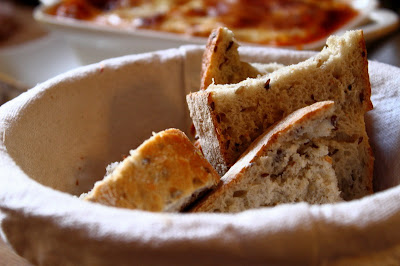
Hohenfels Volks: Bread Basket
ISO 800, f/5.6, 1/25, 55mm
The Bread Basket. Rustic rye break in a restaurant in Prague. Metered for the bread shadows, and stopped down 2 stops.

That’s about it for today. Tomorrow we’ll do something on limitations and expectations, leading into Monday’s exercise. I hope everyone will tune in and start to look for some great shots. Have a great evening and see you tomorrow!

Don’t forget to post any of your images you’d like to see here at the Hohenfels Volks Facebook page. Of course, commenting on both Facebook and here is always appreciated, too! Don't forget, we're on Google+, too!
Wednesday, December 28, 2011

All Work...

Greetings and welcome to Hohenfels Volks, THE place for our place. Wednesday finds us entering the downhill side of another week here in Hohenfels! I trust everyone is getting ready to ring in the New Year in an exciting and safe way!

Today we’re posting the entries in our theme for last week, Fruits of Your Labor. There were 2 entries this time around, Jennifer’s and mine. Let’s start with Jennifer’s entry.

Hohenfels Volks The Fruits of Jen's Labor
Copyright 2011 JennyO
Another great shot by Jennifer!

She described it in her own words, “Hi there, my submission is more of a layers project, the fruits of my workouts at the gym and my need to stay inspired”

My first thought was “rewarding your labor with more labor?” and I actually left that as a comment. Then I realized that after a long day, exercise is a bit of a reward, as it helps you unwind. I also realized that by working so hard, she was actually showing us the reward of her workouts, a fit and healthy lifestyle, and body. Kudos on that. The motivating quotes actually are very cool, but for the time being, I’m going to discount them, as we are talking about her photo.

I really like the idea of this image. Using the light from the window helps sculpt the form shown here and create a flowing silhouette without being a silhouette. Having lighting come in behind her allows for nice details and color to be brought out. Using the window as a light source, close up like this creates a nice bright light that wraps her body, and displays a nice fall off due to its softness. Large light sources are soft light sources! By shooting from a lower position, she creates a powerful subject, giving a bit of the dynamic to her shot! Chest height camera shots for a portrait make nice full body and 3/4 portraits, when shot from lower and looking up, it adds power and strength to your subject. A great pic using great light, with the quotes thrown in, it serves to remind us that hard work truly can be its own reward.

Next up is mine.

Hohenfels Volks A Quiet Evening
ISO 100, f/5.6, 2 seconds, 55mm
A Quiet Evening With the Princess

I chose to use a quiet Christmas scene to illustrate the reward I get from a quiet evening with my daughter, Jasmine. Of course, it’s rarely a quiet evening, but it’s almost always rewarding. Sharing her homework, eating our dinner, and enjoying either games or stories together makes the day’s labor worth the effort and more.

The cocoa had whipped topping on it, which had to be replenished to keep some form, as it melted throughout the 15 minutes of shooting for this shot. Smoothing the light with a small bounce brought out the colors in the mug, highlighted the cocoa bubbles, and added a nice bit of depth to the candle. A plus was the layering in the cocoa, from dark to white! For a similar setup, check out our last Ride Along. By allowing the light to fully hit the tree, we got some nice reflections and color from the bulbs and the tree, creating a Christmas feel, which is what spending time with the princess can be like!

Well, that’s it for tonight. For more on lighting glass, check out LIGHT—SCIENCE & MAGIC, from our last Reading List post. Also, check out Jennifer’s blog, it’s in our links to the right. She makes some great pics that deserve a look. I hope we’ll get some more pics posted in our next theme round up. Let’s get everyone voting and taking their pics for this week’s theme, Knock Knock.

Enjoy the rest of your evening, and remember to cast your vote for next week’s theme. Don’t forget to get your pics posted at the Hohenfels Volks Facebook page. Of course, commenting on both Facebook and here is always appreciated, too!

Monday, December 12, 2011

Exposure and Exposing?

Greetings, Hohenfels, welcome to Hohenfels Volks, THE place for our place. Monday in Hohenfels, the start of a new week, finds the children going to school, the adults going to work or the fields, and the rest of us going in 10 different directions.

Of course, here in Hohenfels, Monday also means another theme. Based on the voting, this week’s theme will be “Expose Yourself (Umm, NOT like that!),” with 50% of the votes. 50% sounds so much nicer than 3 votes. This week, we should get a lot more votes, and a lot more participation, I hope!

The purpose of last week’s theme was to see the light, the way light moves, and the way it rises and falls. I hope, even if you didn’t participate, you were able to do some work with lighting. One of the tips I offered was to place an IPad with a white screen under a semi-transparent bowl. The bowl creates a half dome, allowing for easier viewing of the “bubble” created by the light. This “bubble” is not so much a thing you see, but something you notice in the way it interacts with the scene. I’ll have more about the nature of light and what I call “the bubble effect” in another post.

Moving on to this week’s theme, it should be easier than last week’s! At least, it should be somewhat easier. Because photography is an art, this week’s theme deals less with the technical side, and more with the expressive and artistic side of photography. This is where it may be harder, too. Because to do a shot that meets this week’s theme, "Expose Yourself (Umm, NOT like that!)," means injecting your self into the image. Notice how I separated yourself into 2 distinct words here, your self. By injecting your self into an image, you can create an impact with your photos and control the reaction of the viewer.

Here are some thoughts to make it easier for you to Expose Yourself. One way is to think of that which you value, it may be a possession, a person, or an ideal. Some ideas are a family member, the relationship you share with a special friend, integrity, hard work, and liberty, just something positive in which you place high stock. Think about how that which you value makes you feel, and how you can best show, and share, the feeling you get. The key here is not to be in or part of the image, beyond its creation.

Perhaps your memories of long ago Christmases with family gathering, and the smell of the tree can bring a feeling to you like nothing else. Share that feeling by creating an image that represents the memories. Maybe you hate the way the politicians use the commoditization of poverty to stay in power; it really gets your goat to see people enslaved to the greed of the powerful elite. Capture something that shows that, that shows us the way these people bring you down, that makes us angry right beside you. Of course, it could just be as simple as that magnificent golden pink glow as the sun sets over an idyllic village somewhere in the heart of Bavaria. Tinged with light pinks, purples, and bold fiery reds, the sunset made you feel like the magic of childhood. Share that feeling!

The most important thing for this week is to bring your feelings to fruition through your work, to share that feeling and moment with us, to make us feel something you felt when you viewed the scene before taking the image, to wow us the way you were wowed. Now doesn’t that make you feel better than what you were expecting when you saw “Expose Yourself” as one of the choices?

Remember to cast your vote for next week’s theme. Don’t forget to get your pics posted at the Hohenfels Volks Facebook page. Of course, commenting on both Facebook and here is always appreciated, too!

Monday, November 28, 2011

Morning Moments?

Greetings, Hohenfels, welcome to Hohenfels Volks, THE place for our place. I hope everyone out there had a magnificent Thanksgiving. There is so much to be thankful for, that one day is never enough!

I see no one posted their photos for Thanksgiving With a Twist. It’s too bad we didn’t get to see what you came up with. I visualized several series of shots, but due to limited space had to go with something else. I wound up with a shot that only had a couple inches DOF. Nice shallow view and some nice blur, but not what I originally wanted! Oh, well, roll with it.

Hohenfels Volks cake
ISO 400, f/5.6, 1/25, Focal length 100mm
The cake here is about 3 inches thick. That gives about a 1-3 inch depth of field. the secret is a long focal length with a wider aperture.

This week’s theme, chosen by you voters out there, is “Morning Moments (Morning Shots, Wake Up!)” This theme is most likely going to cause some consternation. The guidelines for the theme are:

1- Photos must be shot between 0400 and 0700
2- You must take your photos between 0400 Tuesday morning and 0700 Sunday morning.
3- Photos are not shots of your morning routines, they should be something at least 1/2 KM away from your home. Perhaps a landscape or nice shot of your town.

Remember, when shooting in the morning or evening, bring a flashlight! Not only will it help you see, it will help you focus. Try to visualize your shot a day or 2 out to minimize wasted time in the cold, and visit the location prior to shooting it to get an idea of the ground and troubles you might expect.

Next week’s poll is up, and includes those not chosen for this week and something new to replace this week’s theme. All the themes we’re going to explore are meant to push your photography and bring together some of our lessons and talks. I hope you will enjoy them! I’m looking forward to more votes, and more participation in the theme.

Taking photos, it’s something we all love to do. Get posting and share the love at the Hohenfels Volks Facebook page, and or by commenting here!

Tuesday, September 27, 2011

Visualization

Hello, again!

Welcome to another post. This time we’re going to talk about VISUALIZATION. I won’t be adding this to the Intro series, as this is more about the artistic side of photography.

Ansel Adams defined VISUALIZATION as "the ability to anticipate a finished image before making the exposure." In fact, he dedicated the first chapter of his book “The Negative” to the subject. VISUALIZATION covers more than the simple definition, but we’re dealing with it in a simple sense right now.

Most of us start out as what I call “See and Snaps.” You see something you like and just click the shutter until you get something that looks similar to what you saw. “See and Snaps” who never grow beyond that stage, usually end up giving up on photography or just settling for “seeing and snapping.” They never grow beyond it, because they never learn about VISUALIZATION.

Learning to VISUALIZE will improve your images with some certainty. The first step in VISUALIZATION is learning to separate what you see, from its context and surroundings. This sounds out of sync with reality, but as you will see, is actually easier to develop than you might think. When you take a photo, you are only capturing a piece of the whole scene, even if you go wide angle. See the scene and the piece you want to capture. Figure out how to show it with limited context and surroundings.

Another important part of VISUALIZATION is learning how to see the color, loss of color, and the effect of the light on your sensor and image. This will help you get the best exposure, DOF, and color possible. You need to get familiar with your camera to accomplish this one. This is more technical VISUALIZTION, but it is important in helping set up our shots. Remember, color can refer to the lack of color, too! Shooting black and white leads to some incredible shots, as the works of Ansel Adams, George Hurrell, Yousuf Karsh, and many of the old masters will attest and impress!

Using the technique of VISUALIZATION, you can create art from your photos; you can make some beautiful landscapes, portraits, still lifes, and keepsakes that will warm the heart later in life! VISUALIZATION leads you to think about every shot you take, and helps you to take the time to get it right. If you can’t take the time to get it right, what fun is it?

Here’s an exercise to try. Get a piece of matting or foam core about 8 inches by 10 inches and cut out a rectangle about 4 inches by 6 inches. Try to use black, as it will assist in the exercise, other colors may distract. Carry it around with you whenever you have your camera. Every time you wish to take a photo, first look at the scene, and then look at the image you want to capture through the card you made. Shift yourself, and look through the card again. Check to see if the perspective and framing are harmonious and work together to create something that will make you proud. Take your time and work the scene into what you VISUALIZE it to be. Sometimes that means waiting for the right light, sometimes it means moving, sometimes it means coming back later, but it also always means better pics! Who doesn’t want that? They used to do this exercise in photo courses and schools to teach a little bit about VISUALIZATION. It feels slightly silly, but you’ll be amazed at the outcome. Just using a small frame to get the feel of the image will aid you in developing and perfecting your VISUALIZATION, which will help you to share your vision! Eventually you can see without seeing, at least without seeing through the little card! There are so many places around Hohenfels to practice just VISUALIZING; Regensburg, Hohenfels, Grafenwoehr, Bamberg, Bayreuth, and Munich. Each one has unique things and sites to get you going!

The best source for VISUALIZATION is most likely “The Negative” by Ansel Adams. He writes quite a bit more than I can! Another great post is an article on Ron Bigelow’s Blog. Check it out and don't forget to look at the rest of his site!

Here’s hoping you’re visualizing a great week! Take care and all the best.